Richard Reeves’ Infamy is about two-thirds the length of The Jews of Warsaw, but yesterday I finished my read-through in four weeks, while it seemed I was working with Mr. Gutman’s book for substantially longer. Indeed, Judging from the history of my posts here, from start to finish The Jews of Warsaw took eleven weeks.
Another Research Book Finished!
I still have to collate the notes from both readings and draw my own parallels, but that isn’t going to be quite so straightforward as I’d originally thought.
One Aspect.
For instance, Infamy, written in 2014, would seem to be fairly current. That’s not entirely the case however. As Mr. Reeves closes out his report, he notes that Korematsu V. United States (1944) had never been overturned.
It had stood unchallenged for seventy years.
What Was Korematsu Vs. United States?
Following Pearl Harbor, on 19 February 1942, President F. D. Roosevelt issued Executive Order 9066. This Order granted the Secretary of War and the military the power to establish ‘military areas’ and the power to determine which persons should be permitted to leave, enter, remain and be excluded. The Order itself did not mention ‘Japanese,’ but they were the intended target.
Fred Korematsu refused to comply with the enforced evacuations and was subsequently arrested. His case went all the way to the Supreme Court, the decision being delayed until after the 1944 Presidential election. Ultimately, the Supreme Court upheld his conviction, his crime being effectively living in his home in a State in which he was born a citizen.
He was sentenced to five years probation, starting in the Tanforan Assembly Center and later the Topaz concentration camp.
A Travesty Overturned?

In 2018, the U.S. Supreme Court upheld President Trump’s travel ban in the case TRUMP, PRESIDENT OF THE UNITED STATES, ET AL.
v. HAWAII ET AL. (full text of the decision available here.) In upholding the ban, Chief Justice Roberts took the opportunity, presumably due to Justice Sotomayor’s dissenting opinion, since she’s the only Justice with a written opinion that mentioned Korematsu, to state:
The dissent’s reference to Korematsu, however, affords this Court the opportunity to make express what is already obvious: Korematsu was gravely wrong the day it was decided, has been overruled in the court of history, and—to be clear—“has no place in law under the Constitution.” 323 U. S., at 248 (Jackson, J., dissenting).
Chief Justice John Roberts, Supreme Court of the United States, TRUMP, PRESIDENT OF THE UNITED STATES, ET AL. v. HAWAII ET AL., June 26, 2018
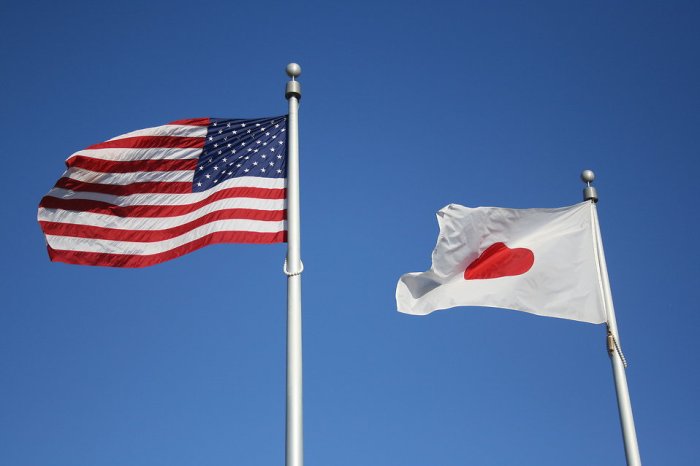
Or Was It?
But that, on scratching the surface, is only the beginning of it. In the words of Hiroshi Motomura, a UCLA Law Professor:
Overruling Korematsu the way the court did in this case reduces the overruling to symbolism that is so bare that it is deeply troubling, given the parts of the reasoning behind Korematsu that live on in today’s decision: a willingness to paint with a broad brush by nationality, race or religion by claiming national security grounds.
Hiroshi Motomura, Professor of Law, UCLA, quoted in New York Times, 26 June 2018
This kind of reasoning to rationalize what are prima facie unconstitutional decisions is pertinent to the key that starts the engine of the Black Box Factory stories, and is in part captured by Justice Sotomayor, underscoring Mr Motomora’s concern.
…a policy first advertised openly and unequivocally as a “total and complete shutdown of Muslims entering the United States” because the policy now masquerades behind a façade of national-security concerns.
Justice Sonia Sotomayor, Supreme Court of the United States, TRUMP, PRESIDENT OF THE UNITED STATES, ET AL. v. HAWAII ET AL., Dissenting opinion, June 26, 2018
This is worth bearing in mind given the concern stated by one of the three dissenters in the original 1944 Korematsu decision, the same dissent which is referred to by Mr. Reeves (p. 283, Infamy):
But once a judicial opinion rationalizes such an order to show that it conforms to the Constitution, or rather rationalizes the Constitution to show that the Constitution sanctions such an order, the Court for all time has validated the principle of racial discrimination in criminal procedure and of transplanting American citizens. The principle then lies about like a loaded weapon, ready for the hand of any authority that can bring forward a plausible claim of an urgent need. Every repetition imbeds that principle more deeply in our law and thinking and expands it to new purposes.
Justice Robert Jackson, Korematsu v. United States, 323 U.S. 214, Dec. 18, 1944
In that way, Chief Justice Roberts, in overturning the Korematsu decision, found ‘national security’ a constitutional justification for a carte blanche travel ban based on what was a thinly veiled religiosity test by proxy. In fact, the text of the travel ban decision mentions ‘national security’ fifty-five times.
Banning Travel in Black Box Factory?
From the perspective of the Black Box Factory stories, the travel ban is irrelevant. The important takeaway is how Justice Roberts’ overturning of Korematsu misses Justice Jackson’s point entirely.
That metaphorical loaded weapon is still available for use, and is used here in the name of national security, which ‘imbeds that principle’ even more deeply.
An Acknowledgement
Chief Justice Roberts, in the decision, makes the not inaccurate point that:
The forcible relocation of U. S. citizens to concentration camps, solely and explicitly on the basis of race, is objectively unlawful and outside the scope of Presidential authority. But it is wholly inapt to liken that morally repugnant order to a facially neutral policy denying certain foreign nationals the privilege of admission.
Chief Justice John Roberts, Supreme Court of the United States, TRUMP, PRESIDENT OF THE UNITED STATES, ET AL. v. HAWAII ET AL., June 26, 2018
…and he has something of a point. But the final decision of where Presidential authority lies is in the Supreme Court’s interpretation of the Constitution, so the 1944 Supreme Court implicitly held that Executive Order 9066 was also within Presidential authority. Additionally, nobody who had followed the progression of what began as a call for a ‘Muslim Ban’ (BBC News, 08 Dec 2015) could in good conscience see the travel ban as it ended up as anything other than fulfillment of a campaign pledge to institute a religiosity test.
Just One Aspect.
…and that’s just one aspect of a dishonorable chapter in U.S. history.
So what’s my point?
Nothing stays still and everything gets more complicated as you dig beneath the surface. Which means that what is written as factual at the time:
Korematsu was never overturned.
…can, in fact, change…
Korematsu has been overturned.
…but sometimes only superficially…
Korematsu has been overturned, but it’s still alright to fold the Constitution to hide the inconvenient parts in the name, if not of ‘military necessity,’ then ‘national security.’
…and its up to us to figure out the difference…
Ash, the Cat.
This week’s topic has been a bit heavier than usual, so here’s a picture of Ash, the neighborhood stray cat. He seems to have adopted us as a family, or at least a source of food, water and head rubs.

Up Next…
In all honesty, I was lucky to get to finish Infamy on Saturday. I had other plans made, but the weather messed them up.
Next week I also have plans that could easily wind up swallowing the whole week, so my goals are the same and no new ones are going to be added this week:
- It would be awesome if I could spend some time correlating my notes from the two readings I’ve completed this far into some sort of order that could be used to base a much more solid outline than the nebulous one I have in mind right now.
- After that, I have one minor point to discuss with my Alpha reader before I can decide exactly what my next step with The Old Man is.
Meanwhile, I hope everyone has a great week. Stay safe.
Categories: Black Box Factory, Japanese American Internment, Politics, Research, Research, Supreme Court Decisions
 Andrew Wellington
Leave a comment