Part of our coming to Tennessee in the first place was to establish a home that gave us good resilience: a safe, energy efficient home on land capable of providing healthy food for the family. Organic vegetables and grass fed meat. The economic issue is, however, getting the land to pay for its own taxes.
We’ve raised and processed rabbits before, but nobody commercial processes rabbits, and anyone who likes rabbit meat raises their own.
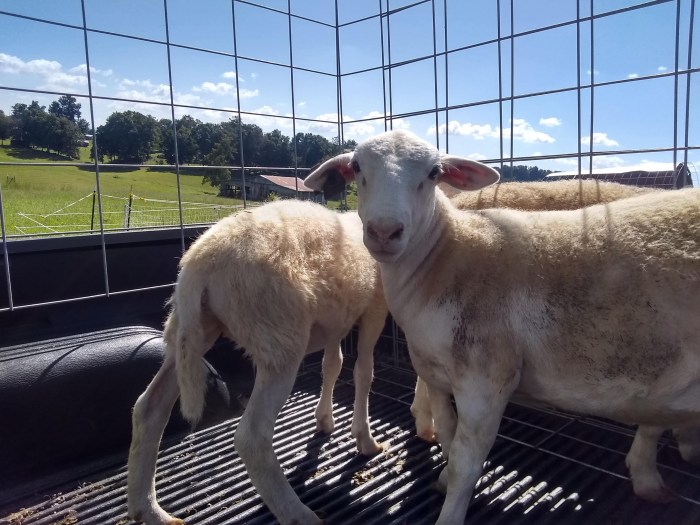
I’ve mentioned before about our having gotten lambs, but now I can break it all down into the kind of information I haven’t seen anywhere, so if you’re asking, as I have, how much does it cost to raise animals, how much meat can you get and what does that amount to at the bottom line, I can finally spill those particular beans.
The Lambs.
I picked up our three on August 29th and we kept them for 132 days in total before processing.
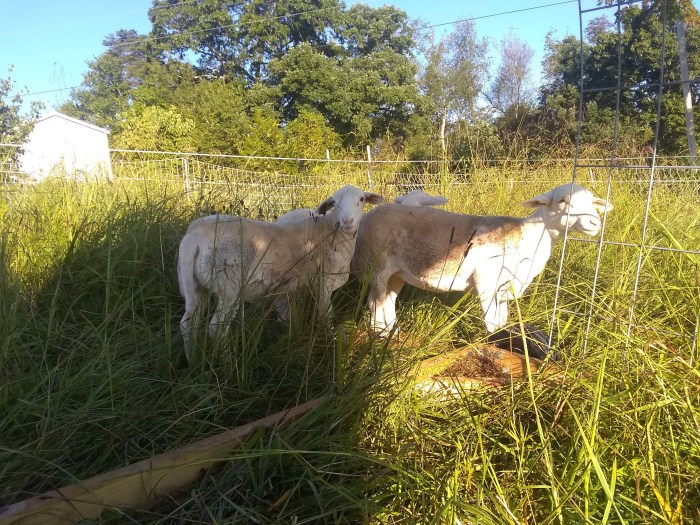
One of the ewes started out here a little undernourished, but the good lady I bought them from explained that her mother had contracted mastitis, she’d quickly recover and catch up with the other two. She certainly did.
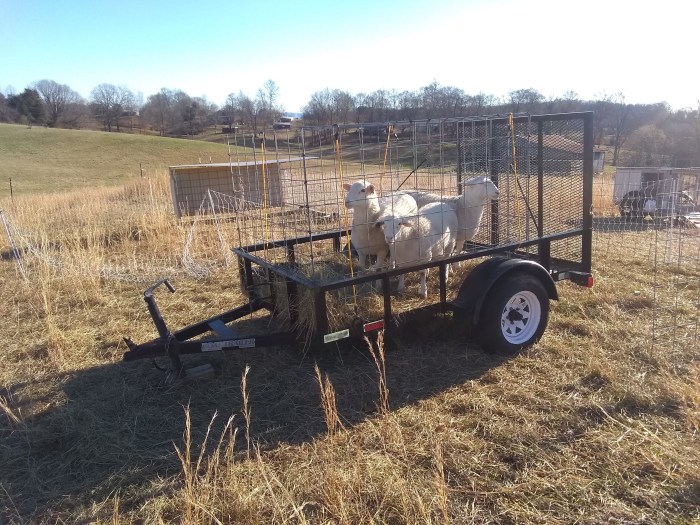
On January 8th, we finally said goodbye to them, which I mentioned in a previous post. Not the most cheerful task I’ve ever undertaken, but we consoled ourselves that these beautiful creatures had originally been raised for slaughter and would have been taken to Pennsylvania a good while ago, had we not taken them on. We gave them the best life we could.
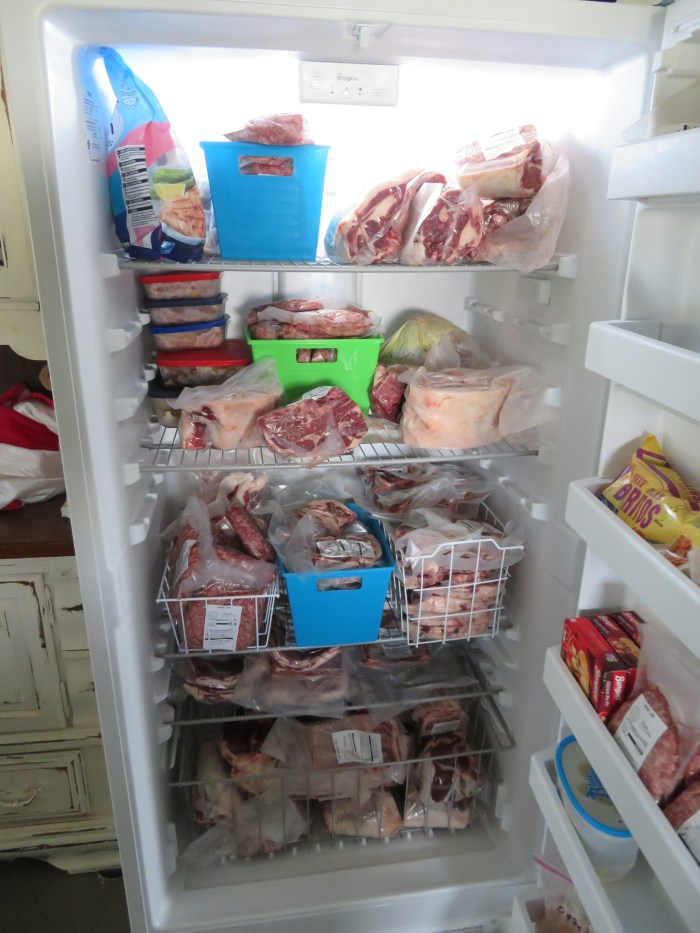
On January 15th, I went to get the cuts of meat, bring them home and load up the freezer with them. Obviously, not everything in that freezer is lamb, but most of it is.
Math Time.
The initial outlay for the livestock was $100/lamb, or $300. That was actually an excellent price, I think, since we’d been quoted $150/lamb for two lambs by another supplier. I’m still on tenterhooks waiting for that particular supplier to call back and say exactly when after July 4th – of 2019 – we can go and get them…
Ah well.
Anyway, we provided them with a smorgasbord of grass and supplemented with Farmers’ Coop feed at a grand total cost of $313.22 for the whole time they were here, which factors in the error in my estimation which leaves us with a bag and a half on hand that didn’t get used.
The local processing center, Snapps Ferry, charged a flat fee of $60 per animal totalling $180, including USDA inspection and when all is said and done they reported a total weight of 197lb.
Assumptions.
My assumptions are that the 197lb is the total weight of the cuts, and that my quickly tallying up the cost of the feed is accurate, and I won’t know either for sure until I settle down and total everything up, but these are the numbers I have right now, and I’m going with them.
Bottom Line.
With the total expenditure, not including infrastructure and hardware that we can reuse, coming in at $793.22, the average cost-to-produce comes out at $4.03/lb. Which is a great price for lamb.
Obviously, a sales price would need to exceed that to cover the ancillary costs, such as my time, fuel, vehicle expenses and so on, but I don’t have a good number for those.

Up Next…
Right now I’m posting ahead of time because I’m not going to be able to keep up with the routine for the next two weeks.
So I hope everyone has a wonderful week and if I can’t get a post up for February 2nd, I’ll be back to normal routine as of the 9th.
Stay safe!
 Andrew Wellington
Leave a comment